

Why Kids Remember Movies but Forget Sunday Bible Lessons
I keep coming back to a question. Why can a child tell you almost everything that happened in a mov
ie they watched six months ago, but struggle to remember what they learned at church a few Sundays ago?
They might remember the main character, the villain, the funny scene halfway through, the problem that needed to be solved and exactly how everything ended. Sometimes they even remember details that the adults watching with them completely missed.
But ask, “What did you learn in Sunday school a few weeks ago?” and the answer can be much harder to find.
I don’t think that means kids find the Bible boring. I also don’t think the Bible needs better stories. Scripture is already filled with betrayal, courage, danger, rescue, kings, prisoners, battles, journeys, miracles and people trying to understand what God is doing in circumstances they never expected.
The difference may sometimes have less to do with what kids are learning and more to do with how they experience it.
Stories Give Our Minds Something to Follow
Think about the structure of almost any memorable movie. There is someone to follow, a problem to solve, unanswered questions, something at stake and a reason to wonder what happens next.
Kids respond naturally to that kind of structure. They predict what might happen, notice clues, get frustrated when a character makes the wrong choice and celebrate when the problem is finally resolved. They are not simply receiving information. They are mentally participating in what is happening.
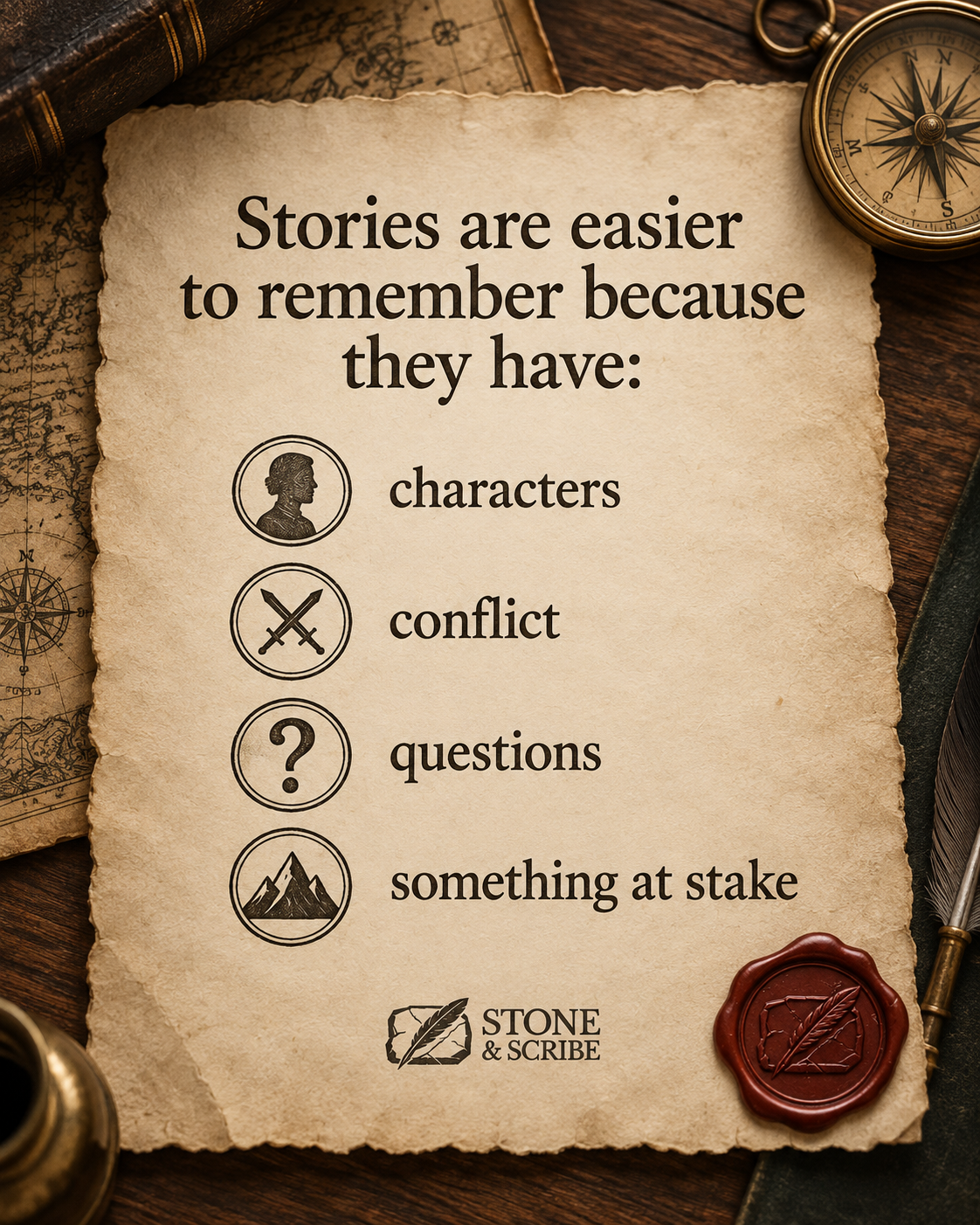
The interesting thing is that Scripture already contains those same elements.
Joseph is betrayed by his brothers, sold into slavery, falsely accused and thrown into prison before eventually rising to a position of enormous influence in Egypt. Years later, he finds himself standing face-to-face with the brothers who betrayed him.
Esther becomes queen under extraordinary circumstances and eventually faces a terrifying decision. She must choose whether to approach the king even though doing so could cost her life.
Daniel is living far from home in a culture very different from his own. His commitment to remain faithful eventually places him in situations where the consequences could literally mean death.
Those stories already contain tension, choices, consequences and unanswered questions. We do not have to manufacture the adventure. Sometimes we simply need to help kids notice it.
What Happens When Kids Become Participants?
There is a difference between being told something and having to discover something.
Imagine telling a child, “Daniel continued praying even though the king had issued a decree.” That is important information, but the child is still mostly receiving it.
Now imagine giving the child a question first: “What was Daniel doing that became so dangerous?” Suddenly they have something to investigate. They open the Bible, search the passage, notice the details and find the answer for themselves.
The Scripture has not changed, and the truth has not changed. What has changed is the child’s relationship with the information. They now have a reason to look more carefully.
Curiosity Changes the Question
Sometimes Bible education starts by giving kids answers. Curiosity often starts somewhere else. It starts with a question.
Why did Joseph’s brothers hate him so much? Why would Daniel keep praying when he knew what could happen? Why was Esther afraid to approach the king? Why did Gideon believe he was the wrong person for the job?
Questions create a gap between what we know and what we want to know, and kids naturally want to close that gap. It is the same reason mysteries work and why someone keeps reading after saying they are only going to finish one more chapter.
When that curiosity points kids toward Scripture, something important happens. Instead of the Bible simply being where an adult gets the lesson from, the Bible becomes the place the child goes looking for answers.
That is a very different experience.
This Does Not Mean Turning the Bible Into Entertainment
This distinction matters because I do not think the answer is to compete with movies, video games or YouTube by trying to make Christianity more entertaining.
Scripture does not need to become entertainment. The goal is simply to give kids more opportunities to engage with what is already there.
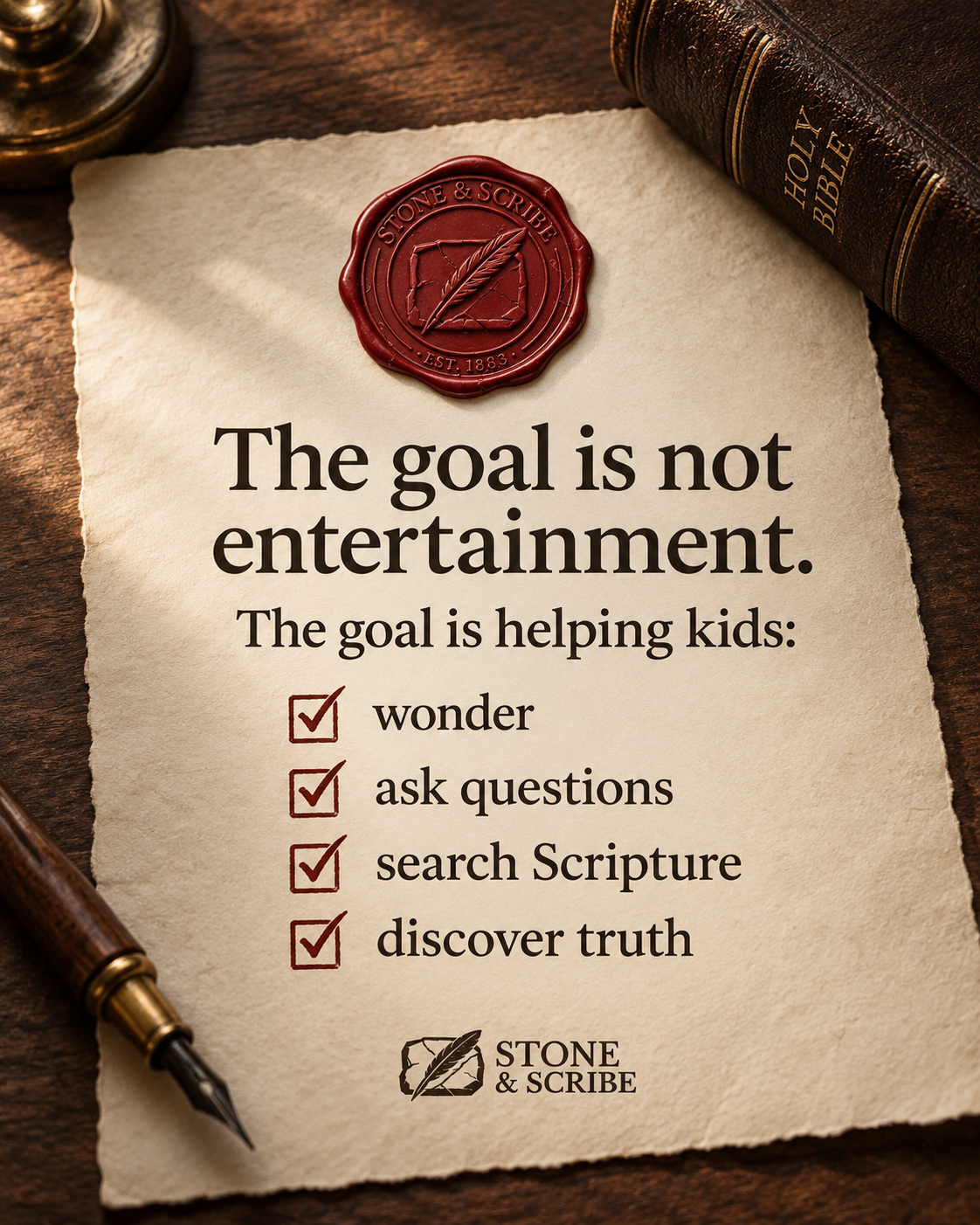
That can mean giving them space to wonder, ask questions, investigate, search Scripture and make connections for themselves. There will always be a place for teaching, listening and simply sitting down to read the Bible together, but those do not have to be the only ways kids encounter Scripture.
Sometimes they can investigate it too.
Give Them Something to Solve
One simple way parents can experiment with this is by changing how they introduce a Bible story.
Instead of saying, “Tonight we’re going to read about Esther,” you might say, “Tonight I want you to figure out why Esther was afraid to speak to the king.”
Before reading about Joseph, you might ask your child to look for the moment when Joseph’s brothers finally realize who is standing in front of them. Before Gideon, you might ask them to find all the reasons Gideon gives for why he thinks he is the wrong person for the job.
The story has not changed. You have simply given the child something to look for.
That small shift can move them from passive listening into active participation.
That’s Part of Why I Created Stone & Scribe
This question has influenced a lot of what I am building with Stone & Scribe. I wanted kids to receive something that immediately made them curious and gave them a reason to start investigating.
A letter arrives. Something does not quite make sense. There are clues to examine, questions to answer and pieces that need to be connected.
Eventually, the trail leads back to Scripture.
The puzzles and story are not there to replace the Bible. They are there to create a reason to open it and pay attention to what is actually happening.
Stone & Scribe is built around the idea that kids can discover the Bible through story, curiosity, investigation and adventure. Sometimes that means decoding something. Sometimes it means examining a document. Sometimes it means looking closely at a biblical character’s decisions.
Underneath all of it is something much simpler: helping kids become curious about Scripture.
Maybe “I Don’t Remember” Is Not the End of the Conversation
If a child does not remember last week’s Bible lesson, it does not necessarily mean they were not listening. It also does not automatically mean the teacher failed or that the story was not interesting.
Memory is complicated, but it is still worth asking whether we give children enough opportunities to actively engage with what they are learning.
There is something interesting about those movies they remember months later. They were not trying to memorize them, and nobody gave them a test afterward. They simply became absorbed in the story and wanted to know what happened.
Maybe that is an opportunity worth exploring when we help kids encounter the Bible too.
Not by changing Scripture or trying to turn faith into entertainment, but by creating more opportunities for kids to wonder, search, investigate and discover.
Because sometimes the difference between information that disappears and a story that stays with us begins with something very simple.
We wanted to know what happened next.

What do you remember?
What Bible story do you remember most clearly from when you were a kid? I’d love to hear which stories stayed with you and why.
If you’re looking for a different way to help your kids explore Scripture at home, you can also learn more about Stone & Scribe, our screen-light Bible mystery adventure delivered by mail.