
One Question to Spark Curiosity at the Dinner Table Tonight
Family dinner conversations can be surprisingly predictable. We ask how school went, what happened during the day, whether homework is finished, or what everyone has planned tomorrow. Those are perfectly normal questions, but they do not always give kids much to work with. The result is often the same collection of short answers parents have heard a hundred times before.
Sometimes the easiest way to get a better conversation going is simply to ask a better question.
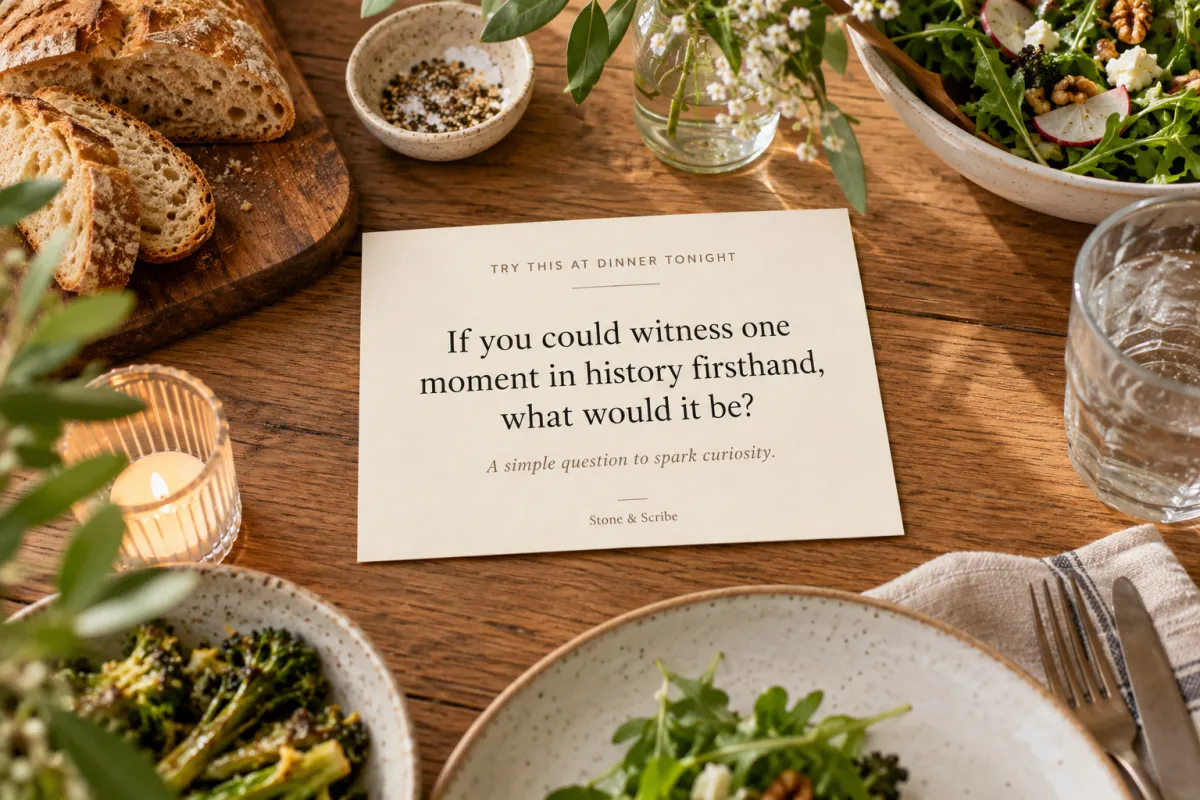
Here is one to try tonight:
"If you could witness one moment in history firsthand, what would it be?"
It sounds simple, but there is a lot packed into that question. There is no correct answer, no expectation that your child already knows something, and no pressure to perform. They simply get to imagine themselves stepping into another moment in time and deciding what they would want to see.
One child might choose the building of the pyramids. Another might want to watch dinosaurs roaming the earth, see the first moon landing, stand inside a medieval castle, or witness a famous moment from the Bible. Someone else might choose something surprisingly personal, like seeing their grandparents as children or being present for an important moment in their own family history.
That is where the conversation gets interesting.
Let the Answer Lead Somewhere
Once your child answers, the temptation can be to jump in with facts. If they say ancient Egypt, we start explaining pyramids. If they mention the Titanic, we tell them everything we know about the ship. If they choose David and Goliath, we begin retelling the story.
There is nothing wrong with sharing what you know, but it can be even more interesting to stay curious a little longer.
Ask why they chose that moment. Ask what they would want to see first, who they would want to talk to, or what they think would be most surprising about actually being there. Those kinds of follow-up questions turn the conversation from a trivia exercise into something much more imaginative.
You may also discover that your child has been thinking about something you had no idea interested them.
That interest can lead somewhere else entirely. A question about the pyramids might turn into a search for how ancient builders moved enormous stones. A fascination with the Titanic might lead to ship design, immigration, or what daily life looked like in 1912. A Bible story might prompt questions about geography, clothing, warfare, language, or what life was actually like during that period.
None of that has to be planned in advance. You are simply following the trail.
Curiosity Changes the Way Kids Learn
Children tend to remember things differently when they are genuinely curious about them. Information stops feeling like something they are being asked to absorb and starts becoming something they are trying to uncover.
That distinction matters.
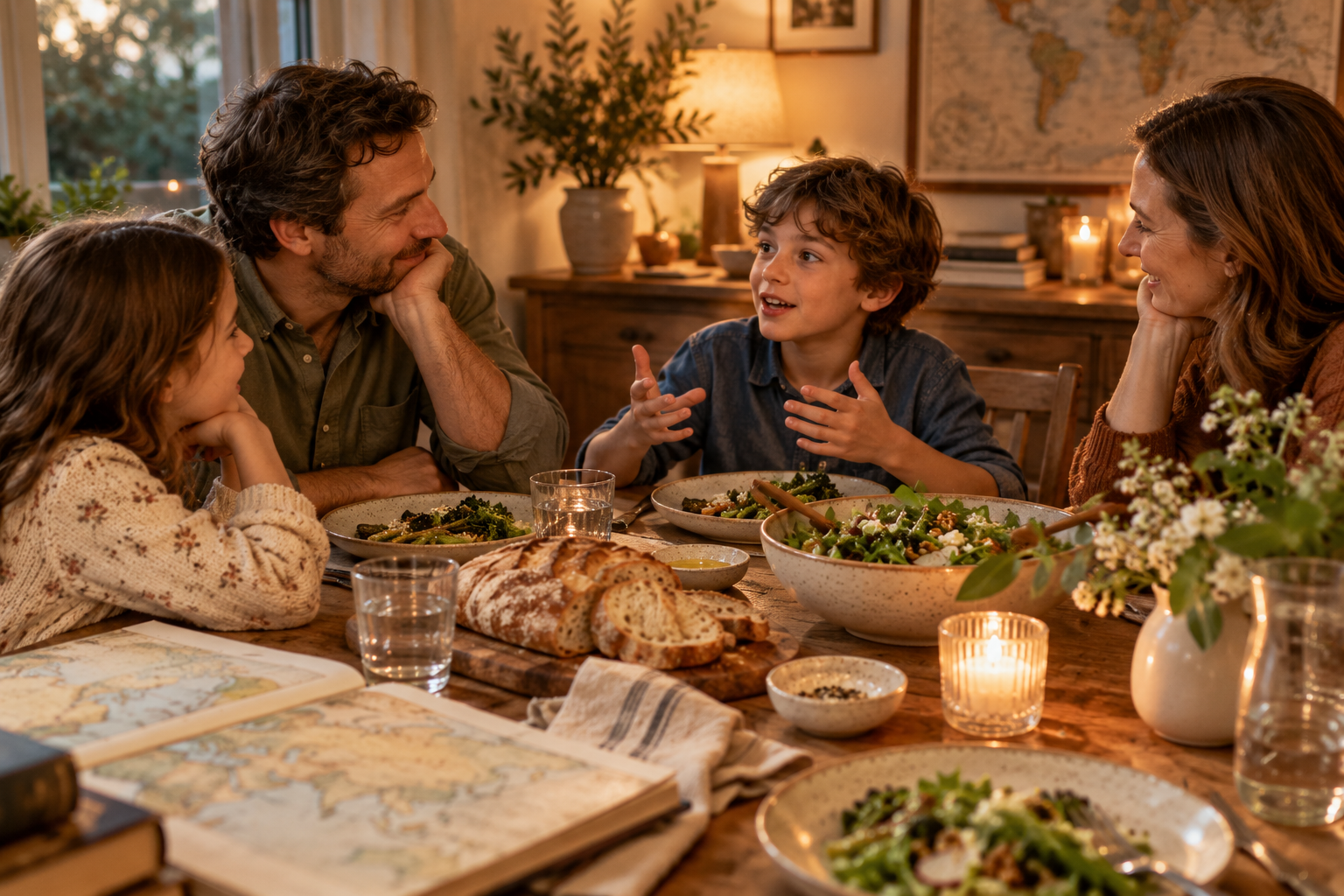
When a child wants to know the answer, they naturally begin doing the things we usually try to teach them to do. They ask questions. They notice details. They compare ideas. They investigate. They remember pieces of a story because those pieces help them understand something they already care about.
This is also a big part of the thinking behind Stone & Scribe.
We use story, mysteries, artifacts, puzzles, history, and Scripture because we want kids to experience the Bible as something worth exploring, not simply another collection of information they are expected to remember. The goal is to help create that moment when a child starts asking questions of their own and wants to know what happens next.
That kind of curiosity can begin almost anywhere, including around the dinner table.
Try It With the Whole Family
One thing that makes this question especially fun is that everyone can answer it. Parents do not get to sit this one out.
You may find that your own answer changes once you really think about it. Would you choose a major historical event? A moment from Scripture? Something scientists have only been able to reconstruct? Would you want to hear a famous speech in person, watch a great structure being built, or simply observe what an ordinary day looked like hundreds or thousands of years ago?
There is no particular lesson you need to pull from the conversation. You do not need to turn it into an activity or make sure everyone learns something before dinner is over. The value is in giving everyone at the table permission to wonder about something together.
So tonight, ask the question and see where it goes:
If you could witness one moment in history firsthand, what would it be?
Then ask your kids why they chose it.
We’d love to hear the answers too. Share yours in the comments, or send the question to another family and see what they choose.
At Stone & Scribe, we believe kids were made for wonder. Sometimes all it takes is one good question to give that wonder somewhere to go.